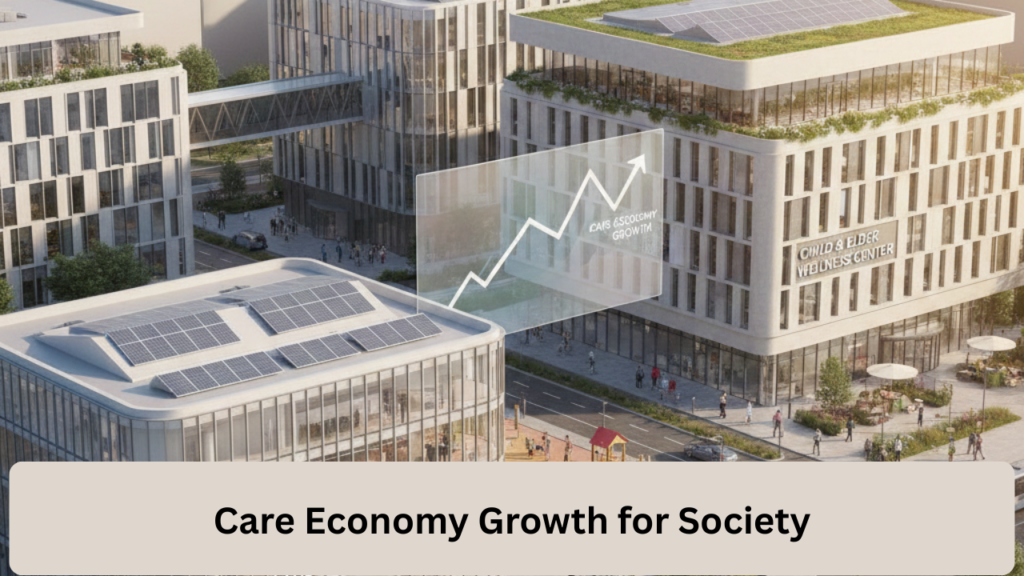
Bahasviral.com – The care economy that encompasses all paid and unpaid labor that involves the act of attending to others has become a significant constituent of the contemporary civilizations. The education, childcare, elderly care, healthcare, disability support, and domestic services are all significant to the wellbeing and wellness of communities.
The care sector, being a long-neglected and unacknowledged domain of societal growth, is currently receiving renewed concerns in its role as a social development force, gender equity, and economic well-being. With the age of people, families are evolving, and social norms evolve, we can no longer but have to invest in the care economy, in order to build societies that are both long-term and inclusive.
Introduction to The Care Economy.
The system of services, jobs, and work without payment that makes people healthy, happy, and connected with others is the care economy. It operates both in the formal and informal context, including hospitals and childcare centers, and in the family homes where unpaid caregivers offer valuable assistance.
There is a high number of women employed this industry spread all over the world. The International Labour Organization (ILO) asserts that care related jobs constitute nearly a tenth of all jobs in the world and the demand of care services is increasing rapidly. Although it is large, there is still a lack of appreciation of the care economy socially and economically.
There is a large number of individuals employed in care, who do not earn a lot of money, lack job security and credit. In addition to this, most economic statistics do not incorporate unpaid care work, which usually done by women. It is an issue since it is the foundation of social stability and productivity.
The Economic Significance of the Care Sector
It is significant to the entire society to invest in the care economy. When an employment opportunity generated in the care services, other employment opportunities in related sectors such as health supplies, education, and transport, generated. Furthermore, it will enable more people to work with the care services being readily available and affordable, particularly women.
Once families are able to access quality child care, elder care and health care, they will be more productive and the disparity between men and women in the working place will reduce. There is a good care economy that also aids in the acquisition of new skills.
Children with good early education and proper treatment stand higher chances of performing well in school and working in their lives. Similarly, healthy aging populations due to good eldercare reduce the cost to the health systems in the long term. Investing in care is therefore more of an economic policy and a social one that enhances the foundations of inclusive growth.
Key Drivers of Care Economy Growth
The increase in the care economy can explained by several phenomena in the world.
- Aging Populations: The population of many countries is also aging rapidly, and it implies that there is an increased demand on eldercare and healthcare services.
- Urbanization and Family Change: With the increasing trend of professional care givers as families continue to shrink and were continuing to spread, the traditional caring roles being assumed by professionals.
- Women in Workforce: With the increasing women paid employment, formal care services required to replace unpaid household chores.
- Technological Advancements: Health care, digital caregiving, and telemedicine are new technologies that are transforming care delivery and reception.
- Policy Recognition: Governments and international organizations are beginning to acknowledge the importance of the care sector in achieving the sustainable development goals (SDGs), in particular, gender equality and good jobs.
All these demonstrate the ever-increasing importance of the care economy to the economy and society itself and the importance of developing policies that contribute to its success.
Conclusion
The healthy mental state of the people also facilitated by a robust care economy which reduces stress on the families and the caregivers. Easy access to care that is not prohibitively expensive allows people to find a better balance between work and home, making the communities more healthy and happy. The growth of the care economy is an opportunity that would allow making civilizations in all parts of the world transform in a positive way.
It satisfies the pressing social needs and also encourages economic growth that is sustainable and equitable. The understanding and investing in the business of care empowers women, offers employment, makes life more fulfilling as well as strengthens the society.
Governments, corporations, and communities should collaborate to increase the value of care in order to transform it into a central component of social and economic policy. The future of society is the future of the care industry. It will be one that puts compassion at just as high a premium as production and thinks care is not only a moral obligation, but a great driver of long-term prosperity.