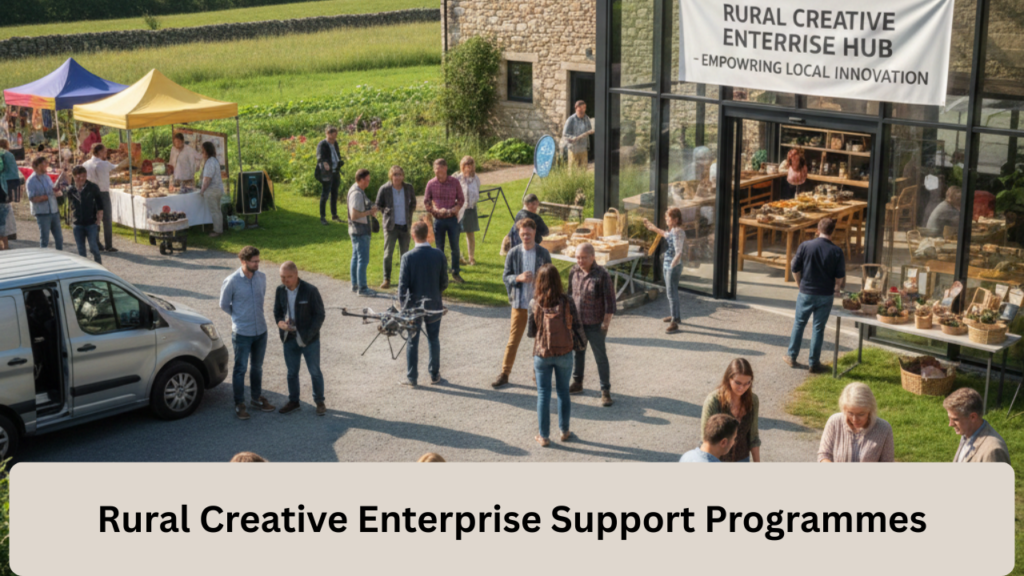
Rural Creative Enterprise Support Programmes. This has been a narrative of loss of rural towns. It has lost people, it has lost opportunities and it has lost relevance. However, when you listen, you will hear a new more optimistic story being told. It is not a story of massive factories entering, but instead of that, it is about local artists, storytellers, and tech-savvy entrepreneurs building powerful economies upwards.
This change centred with rural creative enterprise assistance programs. They are not something that done on the side, but a primary method of creating strong, healthy communities. But what is the reason behind this increased interest in innovation in the country? The solution is a significant change of thought. We learned that the creative industry can find resources and capabilities to address challenges associated with living in rural areas.
Why Creativity is so Successful in the Country.
The ills affecting the rural areas in terms of the structure include the heartbreak of the youth who move to cities, the absence of career opportunities, and frustrating digital divide. However, the kind of business that can perform particularly well in this environment is the creative type, ranging between craft and design to the digital media and cultural tourism.
It is not a large factory, and the graphic design business or pottery studio does not require it. It is founded on information, ability and imagination, all of which readily available. These companies can adapt, using local materials such as landscapes, traditional crafts, and narratives to create innovative products and experiences. The woodworker may utilize the wood locally that was cut a manner that does not damage the environment.
One film-maker can demonstrate the beauty of the region, and one food-producer can transform a recipe of a grandmother to a successful brand. This artistic renaissance builds the spirit of the community in a stronger way other than money. It gives people the sense of pride and association with the place. By making the people feel like their culture significant and their abilities can earn them a livelihood, a sense of belonging created and it will prevent the decline its tracks.
The Blueprint of Support Effective
What then is a support program that actually works? It is much more than a one-time grant. It is a complete ecosystem that makes individuals build their competencies at each level.
- Studio and spreadsheet skills: Studio owners who are also creative are often very good at their work but there is a lot about business that they are not good at. Good programs incorporate artistic mentoring with practical training in digital marketing, money management, and intellectual protection. Not only about getting the potter informed on how to create a pretty glaze but also about getting her to know how to sell her products online and how to secure her design.
- Creating the Creative Kitchen: City inhabitants have the option of hiring an hour on a laser cutter or a professional photo studio. Maker spaces 3D printers Co-working offices fast reliable internet, and recording studios are rural initiatives that provide a shared space. They become creative kitchens where individuals collaborate and exchange ideas and the price of entry reduces considerably.
- Growth Place Principles: The most effective programs are based on a non-one-size-fits-all concept. They do investigate the specials of a place. They would like to hear what tales we have around us. What do we have to work with? What has transferred over generations? What are the skills of the successive generations? The process in County Clare, Ireland, such as one, built upon this principle of place, people, and participation so that the development is real and it belongs to the community.
- Bridging to the Market: a good handsome product crafted in a country cottage is a treasure. The support programs must be proactive in reaching out to the customers. This will involve assisting craftsmen in getting on websites such as Etsy, enabling easier working with urban shops and host such events as rural crafts festivals, which attract people and the media.
- Better Money with a Future: Starter grants are essential, but the best programs consider an extended period.
- They provide small loans to start ideas and help creators develop business plans to sustain projects beyond initial funding.
Planting the Seeds for the Future.
In case a community or policymaker interested in initiating this direction, a couple of important rules should observed: Do not strive to similar to another place. Start with what you’re good at. Plot your own unique advantages, including your landform, past, your people, and then develop them.
- Connect the Dots: Creative thinking: Innovate in all rural development, tourism, agriculture, and education. It is not supposed to a project itself.
- Develop Relationship: Build relationships intentionally. Make people easier learn out of one another and pair up local creators with mentors and markets.
- Design: Make sure that programs are inclusive of all, including women, Indigenous communities and youth and that they address real world issues such as getting about.
The future looks bright. As more people work from home, a web designer in a small town can serve clients worldwide with ease. Finally, it is not always about the money to help creative businesses in rural areas. It is one of the ways to invest in life, identity and hope. It ensures rural areas remain places of opportunity, where future generations can build meaningful lives and take pride in them.
Conclusion
The rural Creative Enterprise Support Programmes are very crucial in transforming the rural localities to a level of creativity, culture and economic prosperity. Rural Creative Enterprise Support Programmes. These programmes bring new dynamism to locations that tend to affected by depopulation, joblessness and digital disparities as individuals and groups convert creative concepts to feasible enterprises.
Their success is in the comprehensive approach that includes skills development, access to technology, financial and good networks that open the creative entrepreneurs to larger markets. Combined with the deep awareness of the surrounding culture, heritage, and identity, it can guarantee economic sustainability and at the same time empower communities and enhance their pride and community.
The rural creative enterprise market will probably be reliant on the further evolution of the digital structure, intersectoral collaboration, and supportive systems that not restricted to underrepresented groups the future. By developing creativity in the grassroots, the rural areas can overwrite their economic narratives and turn into a place of constraint into a place of potential, invention and cultural diversity.